Triskelion AI Systems emblemTriskelion AI Systems
Back to Case Studies
Aquaculture & MarineProduct build

Coastal Intelligence: hardware-free decision support for Ireland's bays

Shellfish growers, seaweed farmers and small ports make daily calls on the sea with no instruments of their own. We built the product that turns real European satellite, ocean and weather data into five plain, cited answers per site, for every bay in Ireland today and European bays next.

All Irish bays

ingested today, Europe next

13 datasets

fused into one graph

0 hardware

for the operator to install

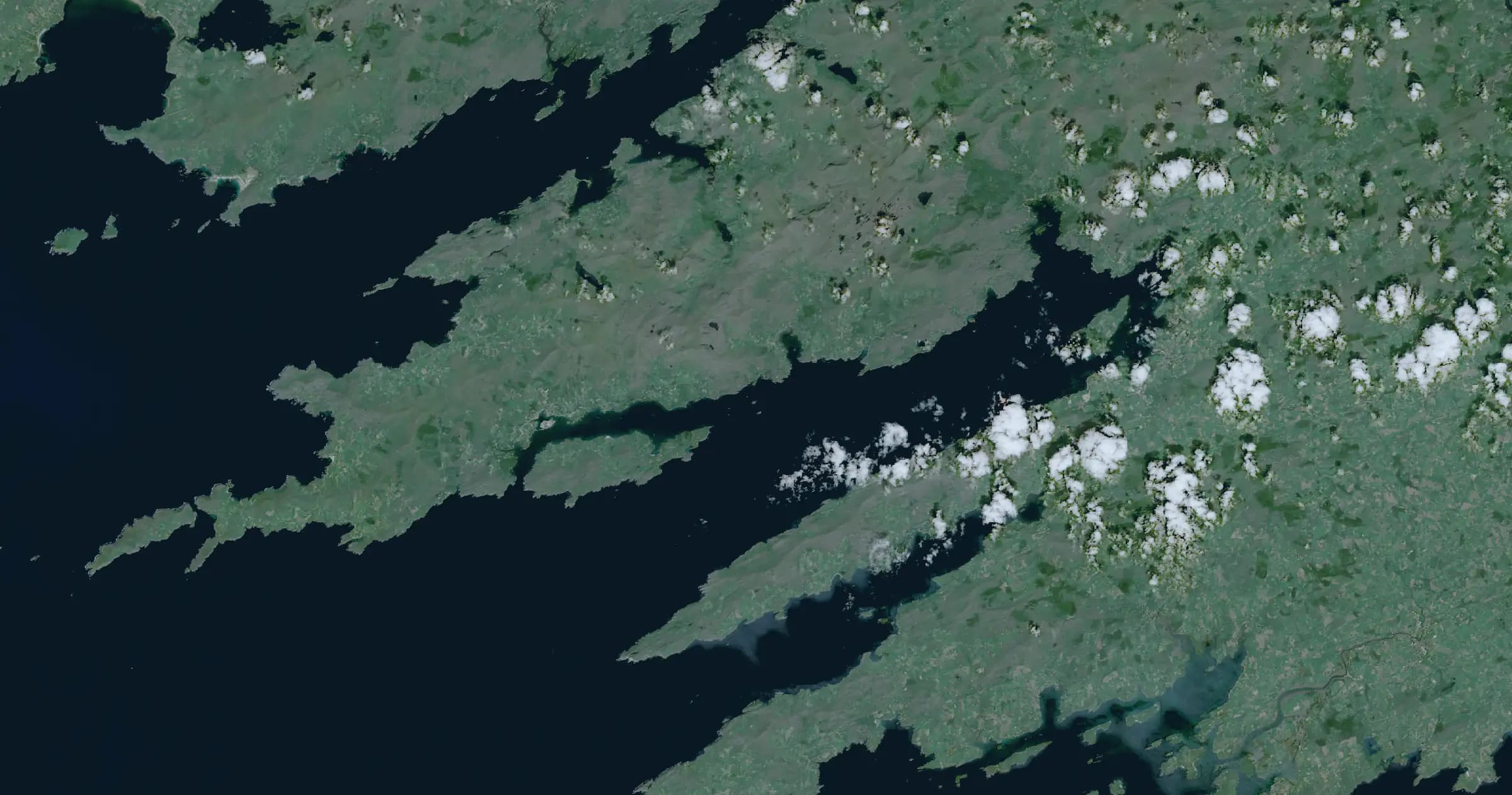
Bantry Bay and the Beara and Sheep's Head peninsulas from Sentinel-2 on 10 July 2025: dark sea, green land, a few fair-weather clouds
  • Gearhies longlines
  • Adrigole mussel lines
  • Whiddy oyster trestles
  • Bere Island kelp lines
  • Castletownbere harbour
  • Glengarriff boat trips
Six example profiles on real data · worst of five signals
Bantry Bay, Co. Cork · Sentinel-2 via NASA HLS S30, 30 m · 10 Jul 2025Contains modified Copernicus Sentinel data 2025, processed by NASA (HLS)

Approach

We started from the real data, not from a farm: Copernicus satellite, ocean and weather products and Marine Institute buoys over Bantry Bay, Co. Cork. On that real ocean we placed six example farm profiles, mussel longlines at Gearhies and Adrigole, oysters at Whiddy, a kelp farm at Bere Island, Castletownbere harbour and Glengarriff boat tours, each with its own species thresholds and activity limits, so the product was designed around named activities from day one rather than a generic risk score. A grower's own records arrive only when they start with their own business.

The data layer came first. A dataset registry holds every product key, dataset id and DOI, and a nightly ingest chain pulls the Copernicus physics, biogeochemistry, wave and ocean-colour products, ERA5 and ECMWF weather, Sentinel-2 turbidity and kelp indices, and the Marine Institute buoy, tide-gauge and HAB bulletin feeds. A 1993 to 2022 climatology is built from the multi-year reanalysis so anomalies and marine heatwaves have a baseline.

Honesty was engineered in rather than written in a disclaimer. Conditions are favourable, marginal or unfavourable for a named activity and never 'safe'. Bloom risk is always flagged as regional and not verified for the bay. A model-skill job scores the regional model against the buoy and the operator's own logger every night, and that score caps the confidence shown on all five signals.

The assistant is grounded by construction: it answers only from the signals, evidence and graph the product holds, scores every answer for grounding before it is shown, and redacts personal data before any text reaches an AI provider. The product shipped with an AI literacy page and an AI notice to meet Articles 4 and 50 of the EU AI Act, and a model card that states the limits.

Adding a bay is configuration only: a bay is a YAML entry plus the public aquaculture site register, with no code change. Every Irish bay is ingested today, and European bays are coming soon.

Challenge

The data to inform a grower's or a harbour master's daily decision already existed across the Copernicus Marine Service, the Copernicus Sentinel satellites, the ECMWF forecast and the Marine Institute's buoys and bulletins. It was fragmented across a dozen services, published in scientific formats, and described a 3 km model cell rather than a named site. An operator with a longline limit of 1.5 m and a mussel stock sensitive to a few degrees of warming had no practical way to read it, and no budget for sensors of their own.

Solution

Coastal Intelligence ingests thirteen open datasets every morning, stores them in PostGIS and a Neo4j knowledge graph with a formal ontology, matches each reading to the site's location and depth, and computes five explainable signals per site: operability window, thermal stress, bloom and water-quality risk, runoff shock, and growing conditions. A map-first web app, a weekly brief and a grounded assistant present them, and every assistant answer carries a citation chip that opens the data behind it. The operator adds nothing but the records they already keep.

Outcomes

  • Every Irish bay ingested today, with European bays coming soon
  • Five explainable signals per site, refreshed every morning, with a nightly skill score against the Marine Institute buoy
  • Thirteen open datasets fused into one knowledge graph with a formal, validated ontology
  • A grounded assistant: every answer carries a citation chip that opens the data behind it
  • EU AI Act literacy page, AI notice and model card shipped in the first release
  • Zero hardware for the operator to install; their own harvest, mortality and logger records corroborate the model

Want to build a focused AI case study?

Start with one narrow business problem, a practical pilot, and evidence you can trust.